 Talk
The default that trains on your work
Arguments about AI and privacy usually ask what a vendor believes. The policy pages suggest a better question, which is what a vendor has set the switch to, and for whom. On one page read on October 20, 2026, the same company trains on consumer conversations unless the user opts out, and declines to train on business conversations unless the organisation opts in. Two defaults, one supplier, decided by which product you bought. This essay is about the setting rather than the principle, because the setting is what is actually in force while you type.
One company, two opposite defaults, on one page
OpenAI's page on how data is used to improve model performance, updated March 13, 2026, states both halves without apology.
For individuals: "When you use our services for individuals such as ChatGPT, Sora, or Operator, we may use your content to train our models." The opening paragraph puts it more plainly still.
"ChatGPT, for instance, improves by further training on the conversations people have with it, unless you opt out."
For organisations, the same page reverses the setting: "By default, we do not train on any inputs or outputs from our products for business users, including ChatGPT Team, ChatGPT Enterprise, and the API."
And it names the mechanism: "Unless they explicitly opt-in, organizations are opted out of data-sharing by default."
The exit for individuals is a separate site rather than a product setting. The page directs users to "opt out of training through our privacy portal by clicking on do not train on my content".
There is also a per-conversation route. Chats started in Temporary Chat "won't appear in history, use or create memories, or be used to train our models".
On the consumer side, opt-out is the norm
The same shape appears at two other vendors, in their own words.
Anthropic's consumer privacy policy states: "We may use your Inputs and Outputs to train and improve Anthropic AI models, unless you opt out through your account settings." Its list of training sources includes "Data that our users or crowd workers provide, including Inputs and Outputs from our Services (unless users opt out)".
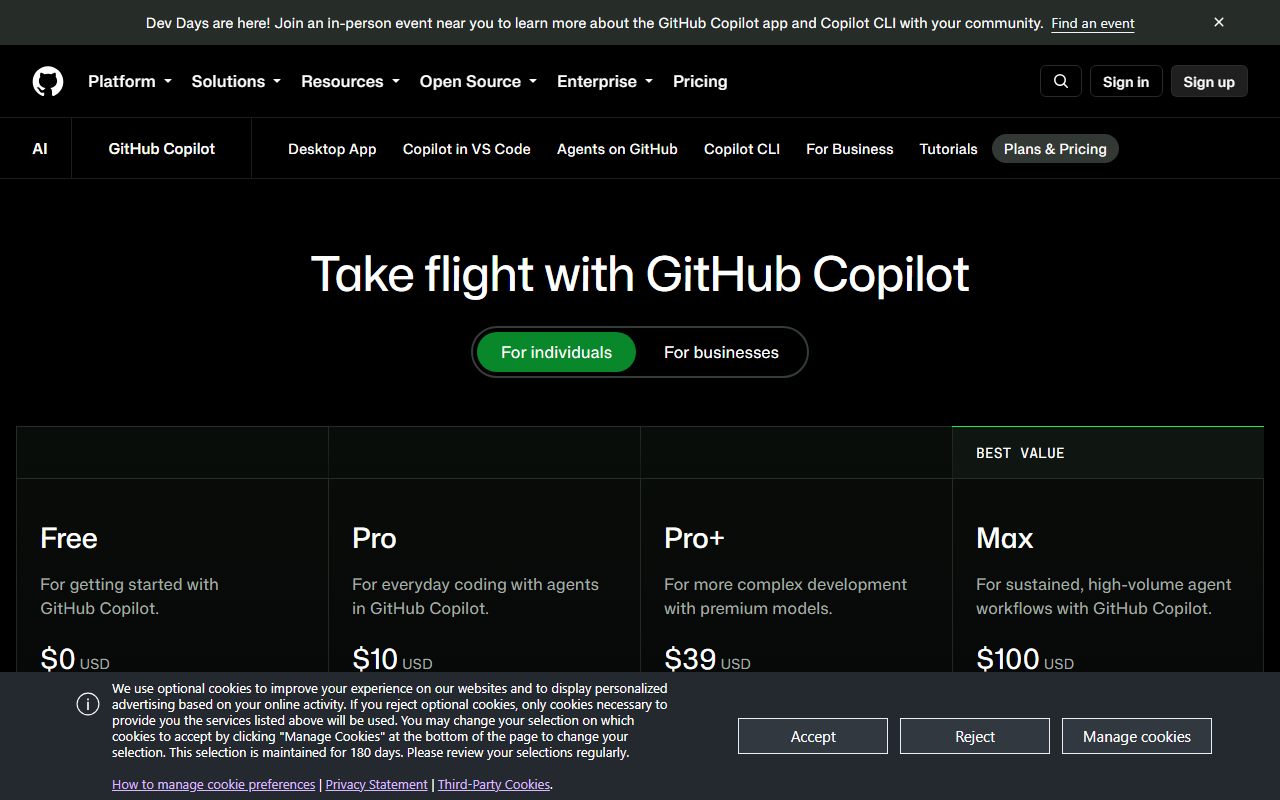
GitHub's Copilot plans page says that GitHub "may also use interactions from users with a Copilot Free, Copilot Pro, and Copilot Pro+ subscription - including inputs, outputs, code snippets, and associated context - to train and improve our AI models unless they have opted out".
Note which plans are listed there. Pro and Pro Plus are paid subscriptions, so on that page the invoice does not change the default. The page says individual subscribers "can opt out" in settings.
Three vendors, three consumer products, the same arrangement: collection is on, and the user is the one who has to act.
Google's page never attaches by default to chats
Google's Gemini Apps privacy hub is the most carefully worded of the four, and the wording is itself the finding.
With the Keep Activity setting on, the page states that "Google uses your activity to provide, develop, and improve its services (including training generative AI models), as well as to protect Google, its users, and the public with the help of human reviewers".
With the setting off: "Your future chats won't appear in your Activity, and won't be used to train our AI models, unless you choose to send Google feedback." Those chats are "still saved for 72 hours".
The phrase by default appears three times on the page we read. Twice it attaches to media: "Your audio and Gemini Live videos and screenshares aren't used to improve Google services by default." Once it attaches to location data.
It is never attached to text chats. The page tells you precisely what each state of the switch does and does not say which state you start in.
The retention figures are published, and they are not symmetrical. Activity "is auto-deleted after 18 months" by default, while data reviewed by service providers "is disconnected from your account and saved for 3 years".
More pointedly: "Chats reviewed by human reviewers (and related data like your language, device type, location info, or feedback) are not deleted when you delete your activity. Instead, they are retained for up to three years."
One vendor puts the default in a contract, in capitals
The strongest version of an opt-in default is not a toggle. It is a clause.
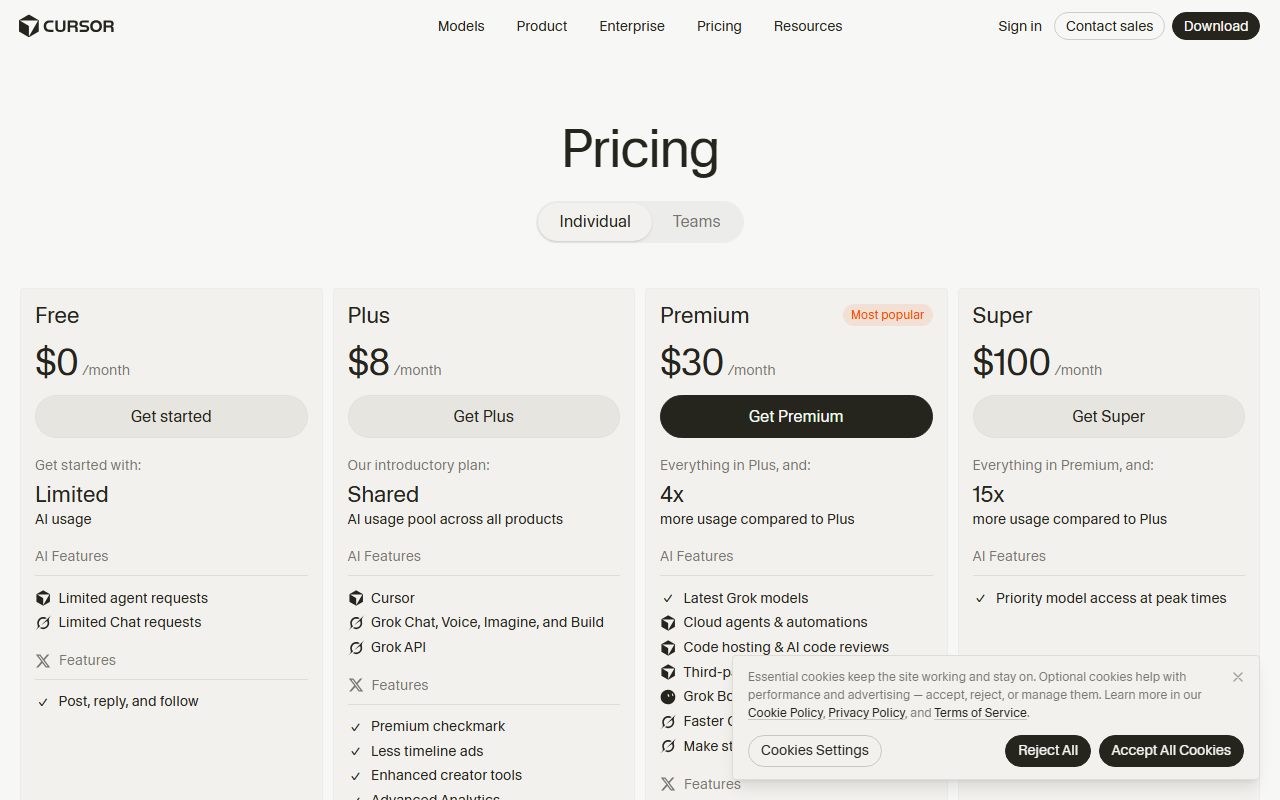
Section 1.3 of Cursor's terms of service reads: "ANYSPHERE WILL NOT USE CONTENT TO TRAIN, OR ALLOW ANY THIRD PARTY TO TRAIN, ANY AI MODELS, UNLESS YOU'VE EXPLICITLY AGREED TO THE USE OF CONTENT FOR TRAINING."
That is a promise that survives a settings redesign and a new employee's first day, which a checkbox does not.
Its security page is more modest in tone and worth reading alongside: "Privacy Mode can be enabled in settings or by a team or enterprise admin. Privacy Mode is available to anyone (free or Pro). New team members inherit the team's Privacy Mode settings. When enabled, we will not train on your data."
Two documents, two registers. The contract states the baseline; the product page describes a mode you switch on. A buyer who reads only the second one will underrate the first.
A default is a date, not a fact
The reason to write the default down with a date is that it moves.
GitHub's page dates its own change: "Starting on April 24, GitHub may also use interactions..." and records the notice period: "Users were notified 30 days before the change went into effect."
Thirty days of email is a reasonable courtesy and a short window for an organisation to notice, decide and act. Anyone who read a policy page before that date and filed the answer now holds a stale note.
This is the practical case for recording the date beside every data-use fact you collect, which is why every figure in this essay carries October 20, 2026.
On the API side, the exchange is priced
Where the setting becomes a line item, the trade stops being abstract.
The Gemini API pricing page carries a row labelled "Used to improve our products" in every model block. For Gemini 3.8 Flash, read October 20, 2026, that row reads "Yes" in the Free Tier column and "No" in the Paid Tier column.
For the flagship model the free column does not exist. Gemini 4 Argon shows "Not available" in every Free Tier cell, with the note "Gemini 4 Argon is not available on the Free tier".
We have argued the commercial half of this elsewhere, in the free tier is a research budget. The point here is narrower: the vendor is willing to express the default as a cell in a price table, which means it can be quoted, compared and checked.
What the opt-out does not reach
Even the clearest opt-out is bounded, and the bounds are written down.
Anthropic's policy continues past the opt-out sentence: "Even if you opt-out, we will use Inputs and Outputs for model improvement when: (i) your conversations are flagged for safety review."
Google's page makes a parallel reservation: "Even if your Keep Activity setting is off, Google still uses your chats to respond to you and help protect Google, our users, and the public, including with help from human reviewers."
And both carve out feedback. Google's off-state sentence ends "unless you choose to send Google feedback", which turns a thumbs-down into a data event rather than a vote.
Deletion has its own clock. Anthropic states that individually deleted conversations are "automatically deleted from our back-end within 30 days", which is a promise about the back end rather than about copies already reviewed.
Five questions worth asking at signup
The reading above reduces to a short checklist, and all five answers are published:
- Which door am I coming in through? On OpenAI's page the individual products train unless you opt out and the business products do not train unless you opt in.
- Does paying change the default? On GitHub's plans page it does not: Copilot Pro and Pro Plus are named alongside Free.
- Is the promise a clause or a setting? Cursor's terms state the baseline in the contract; most vendors state it in a settings panel.
- What survives the opt-out? Safety-flagged conversations at Anthropic, protective use and human review at Google, and anything you submit as feedback at either.
- When was the default last changed? GitHub dates its own change and records a 30-day notice, so any answer you wrote down last year needs rechecking.
None of these questions require a lawyer. They require reading the page on a date and writing the date down.
Why default is the word that matters
Policies describe intentions. Defaults describe outcomes, because most people never open the settings panel, and the vendors know the distribution better than their users do.
That is why the most informative sentence on any of these pages is not the one about commitment to privacy. It is the one that says unless.
What follows in practice
Check the switch for the exact product and plan you are on, not for the brand. The surrounding argument about who can read your work sits in who reads what you type, and the question of who inside a company holds the setting is in what a seat means when the worker is software.
Plan-level detail, with the dates we read it, sits in our subject pages for ChatGPT, Claude, Cursor and GitHub Copilot, the ChatGPT and Claude comparison and the primer on AI assistant pricing for small teams.
The useful habit is small. Before the first real document goes in, open the policy page, find the word unless, and note what follows it and when you read it.
Sources, read October 20, 2026: openai.com policy on how data is used to improve model performance; anthropic.com privacy policy; support.google.com Gemini Apps privacy hub; github.com Copilot plans; cursor.com terms of service and security page; ai.google.dev Gemini API pricing.