 Talk
TalkWhen a model you built on is retired
Software used to rot quietly. A library stopped being maintained, a format fell out of fashion, and you noticed years later when something would not open. Models do not rot. They are switched off on a published date, and the date is on a page you can read today. We read the OpenAI deprecations page and the Anthropic model deprecations page on October 14, 2026, alongside Cursor's terms of service, and the striking thing is not that models are retired. It is that the layer closest to the model publishes a calendar and a minimum notice period, while the layer closest to the user publishes neither.
The vendors have built a vocabulary for dying
Anthropic's page defines four states. Active means "fully supported and recommended". Legacy means the model "will no longer receive updates and may be deprecated in the future".
Deprecated means "still functional but no longer recommended", with a replacement and a retirement date assigned. Retired means "no longer available for use. Requests to retired models will fail."
OpenAI draws the same distinction in different words: "We use the term 'legacy' to refer to models and endpoints that no longer receive updates." Its page adds that "you can expect that a legacy model or endpoint will be deprecated at some point in the future".
This vocabulary is the useful part. It converts a vague worry about obsolescence into a status you can look up and a date you can put in a calendar, per model, per API name.
Both pages commit to a minimum notice period, and the commitment has tiers
Anthropic's figure is the simpler one. Its page states that it notifies customers with active deployments "providing at least 60 days' notice before model retirement for publicly released models".
The table bears that out. claude-sonnet-4-5-20250929 is listed as deprecated on September 30, 2026 with a retirement date of November 30, 2026. That is 61 days, which is the floor rather than a cushion.
OpenAI's commitment is longer and split three ways: "Generally available models: At least 6 months." Specialised variants such as chat and Codex versions get "At least 3 months". Preview models "may be retired with much shorter notice, such as 2 weeks".
The page then gives the advice that matters: it does not recommend preview models "for business-critical production workloads unless you can migrate on short notice". That is a vendor telling you which of its own products not to depend on.
One entry on the OpenAI page does not match the stated floor
The top entry on that page is dated October 14, 2026, the day we read it. It says developers using GPT-4o, GPT-4o mini, GPT-4.1 and GPT-4.1 mini were notified of "their deprecation and removal from the API on January 14, 2027", with gpt-6-luna as the replacement.
October 14 to January 14 is three months. The same page states at least six months for generally available models and at least three for specialised variants. We read both strings on the same visit.
We are not in a position to say which classification OpenAI applied to those four snapshots, and the page does not say. We print both figures with the date because that is what was there, and a reader planning a migration needs the shorter one.
The retirement date can depend on who sold you the model
Anthropic's page carries a sentence that quietly complicates procurement. The dates apply to Anthropic-operated platforms, and "partner-operated platforms (Amazon Bedrock and Google Cloud) set their own retirement schedules, so a model's lifecycle status and dates can differ".
So the same model name has more than one death date, decided by the reseller. A team that standardised on a cloud marketplace for billing reasons has also, without choosing to, outsourced the clock on its own migrations.
The page also offers a forward floor rather than only a backward notice. claude-fable-5-1 is listed as active with a tentative retirement "not sooner than September 1, 2027", and claude-opus-5-5 not sooner than September 22, 2027.
It is not only models. Whole products are on the same calendar
The OpenAI page lists product retirements next to model retirements, with the same date discipline. Agent Builder was announced as deprecated on June 3, 2026 and is "scheduled to shut down" on November 30, 2026.
The Evals platform was deprecated the same day. Existing evals become read-only on October 31, 2026, and the dashboard and API are scheduled to shut down on November 30, 2026.
Reusable prompt objects follow. The v1/prompts API is scheduled to shut down November 30, 2026, and the migration advice is to "move reusable prompt content into your application code".
Fine-tuning is being wound down in stages printed as a table. The pricing page states the platform "is no longer accessible to new users".
From July 2, 2026, organisations that had not run inference on a fine-tuned model in the past 60 days could no longer create jobs. From January 6, 2027, existing customers cannot create new ones either.
This is the part a small team underestimates. A model swap is a configuration change. A product shutdown is a rewrite, and three of them landed on the same November date.
The tool layer makes no equivalent promise
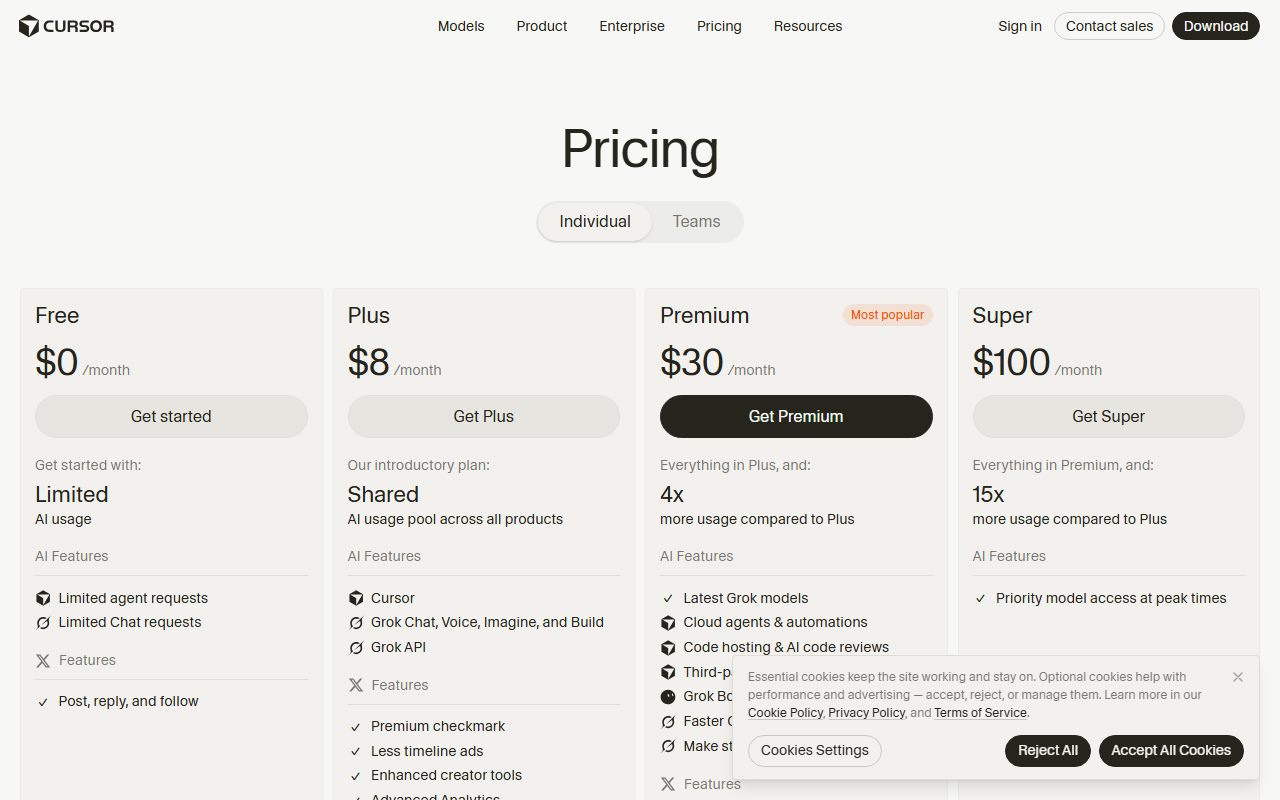
Set that against the terms of a tool built on top. Cursor's terms of service state that "Anysphere may modify or discontinue all or any portion of the Service at any time (including by limiting or discontinuing certain features of the Service), temporarily or permanently, without notice to you".
The termination section repeats it: "We reserve the right to modify, suspend, or discontinue the Services or your access to the Services, in whole or in part, at any time without notice to you," softened by a statement that the company "will strive to provide" reasonable advance notice.
The same section gives the practical instruction: "You should retain copies of any Content as needed so that you have access in the event the Service is modified and you lose access to such Content."
None of this is unusual drafting, and it is not a scandal. It is simply a different contract from a published 60-day or six-month floor, and the difference should change what you build on which layer.
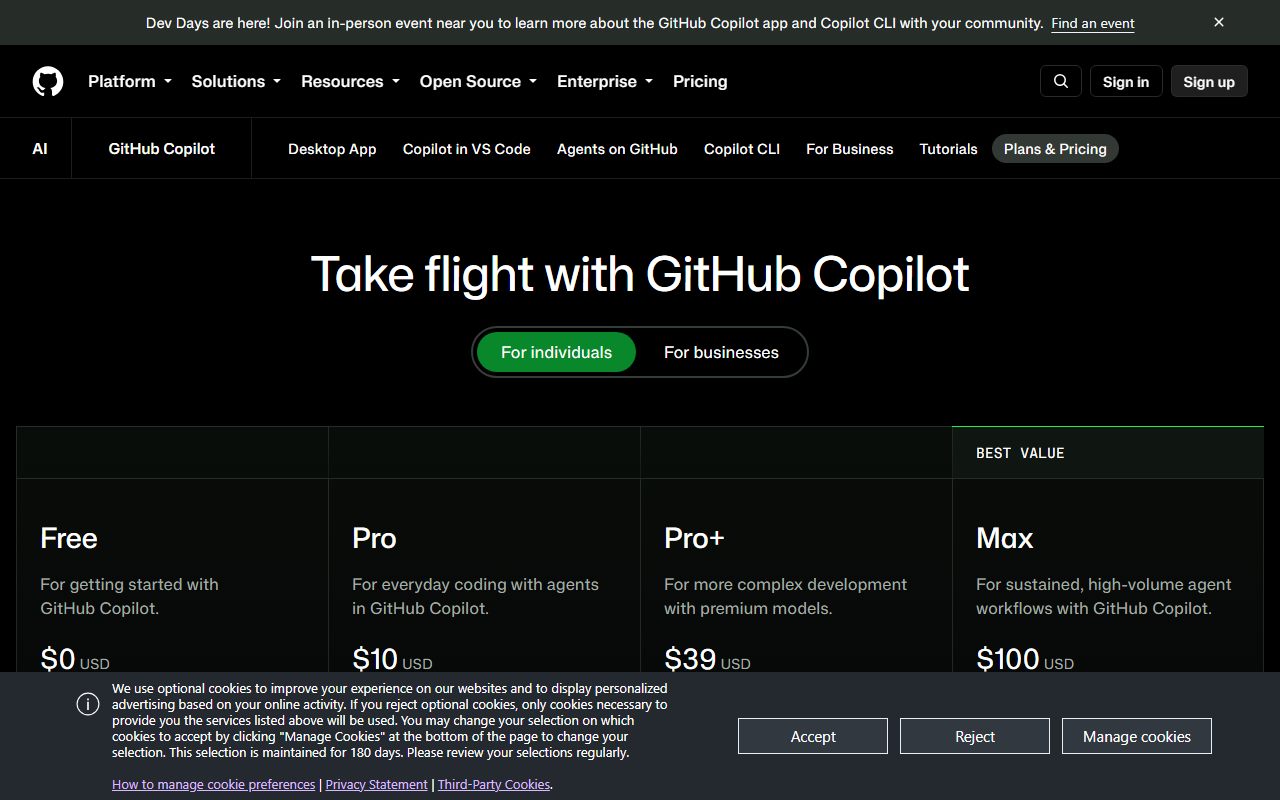
Our subject pages for Cursor and GitHub Copilot quote the plan terms as they stood when we read them.
What a small team should actually do with this
The pages supply the tools for a migration habit rather than a migration panic:
- Pin to a snapshot, not an alias, then diary the date. Both deprecation pages are organised by exact API model name, which is the only identifier a calendar entry can be built on.
- Read the shutdown date programmatically. OpenAI's page explains that the List models endpoint exposes an optional shutdown_date field, "or null if no shutdown date has been announced". A weekly check beats an email that reaches a departed colleague.
- Audit who is still calling the old thing. Anthropic's page describes exporting a usage CSV from the Console "to see usage broken down by API key and model" before the retirement date.
- Keep an evaluation you can rerun. Both vendors recommend testing applications with replacement models well before retirement. Without a saved test set, a forced swap becomes a guess about whether quality moved.
- Know which layer you depend on. A deprecation page with a notice floor and a terms clause allowing change without notice are different risks on the same bill.
The cost side of a forced migration is rarely just engineering time. Replacement models often price differently and tokenise differently, which is the subject of what a context window costs you, and the seat arithmetic shifts with it in our primer on AI assistant pricing for small teams.
The honest reading of a retirement date
Anthropic's page does something rare and lists the costs of its own policy. It says the company retires models "to ensure capacity for new model releases", and that this means users who value specific models must migrate.
It adds that "researchers lose access to models for ongoing and comparative studies" and that retirement "introduces safety- and model welfare-related risks". It records a commitment to "long-term preservation of model weights".
That is a vendor writing down the downside of its own decision, which is more than the pricing page next door manages.
The conclusion is not that models are unreliable foundations. It is that they are dated ones, and the date is published. A dated foundation you can read beats an undated one you cannot.
We made the adjacent case in the claim that you can always switch: the cost of leaving is habit, not export. Retirement is the version where the choice is made for you, and it arrives with a date attached.
The plan side of the two vendors is set out in our ChatGPT and Claude comparison and the subject pages for ChatGPT and Claude.
Sources, read October 14, 2026: platform.openai.com deprecations and pricing; docs.claude.com model deprecations; cursor.com terms of service.